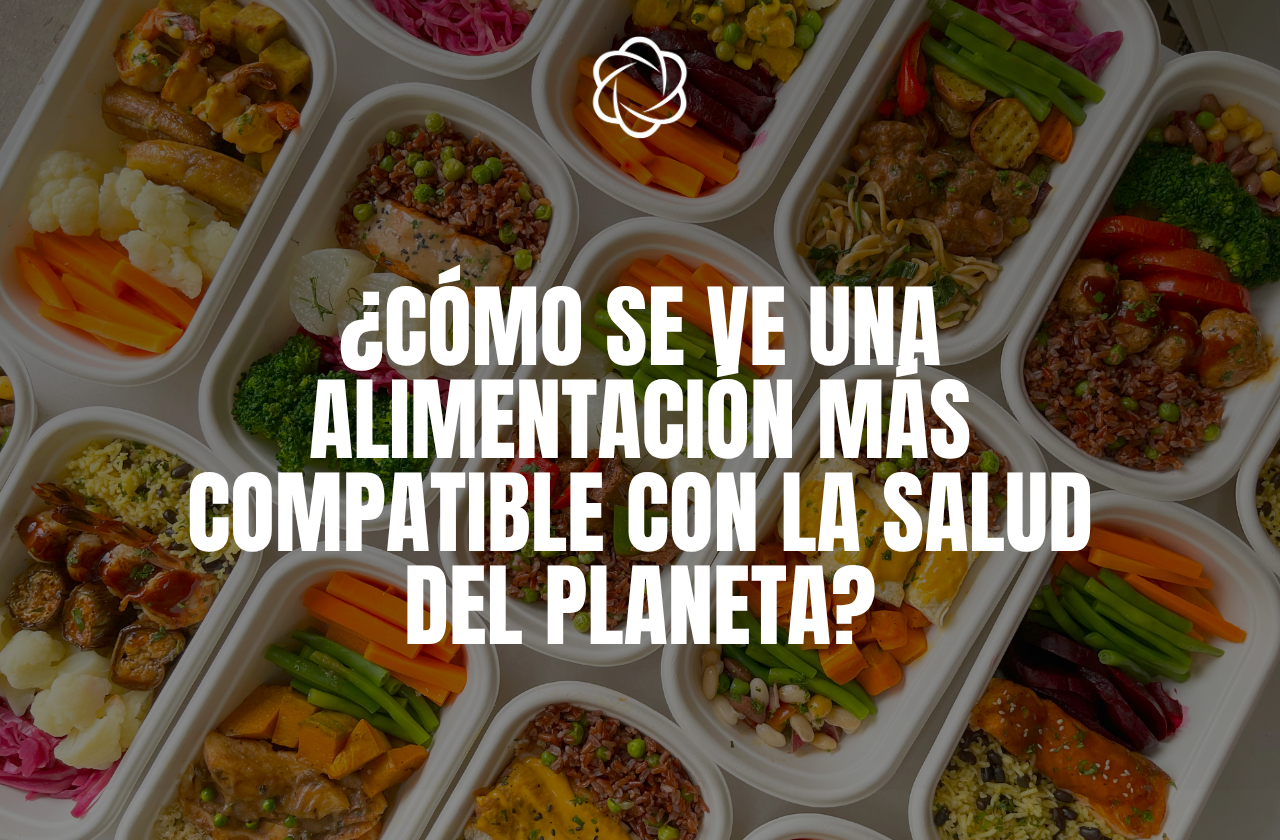
What can I have for lunch today? It’s an everyday question we often answer based on taste, price, or nutritional value. But there’s another factor we can also consider: the environmental impact of what we eat.
Although chickpeas and lentils belong to the same food group and are common options for incorporating plant-based protein into our diets, their carbon footprints are not exactly the same.
Chickpeas vs. Lentils: Which Generates More Emissions?
When comparing a 200-gram serving, the data shows a significant difference:
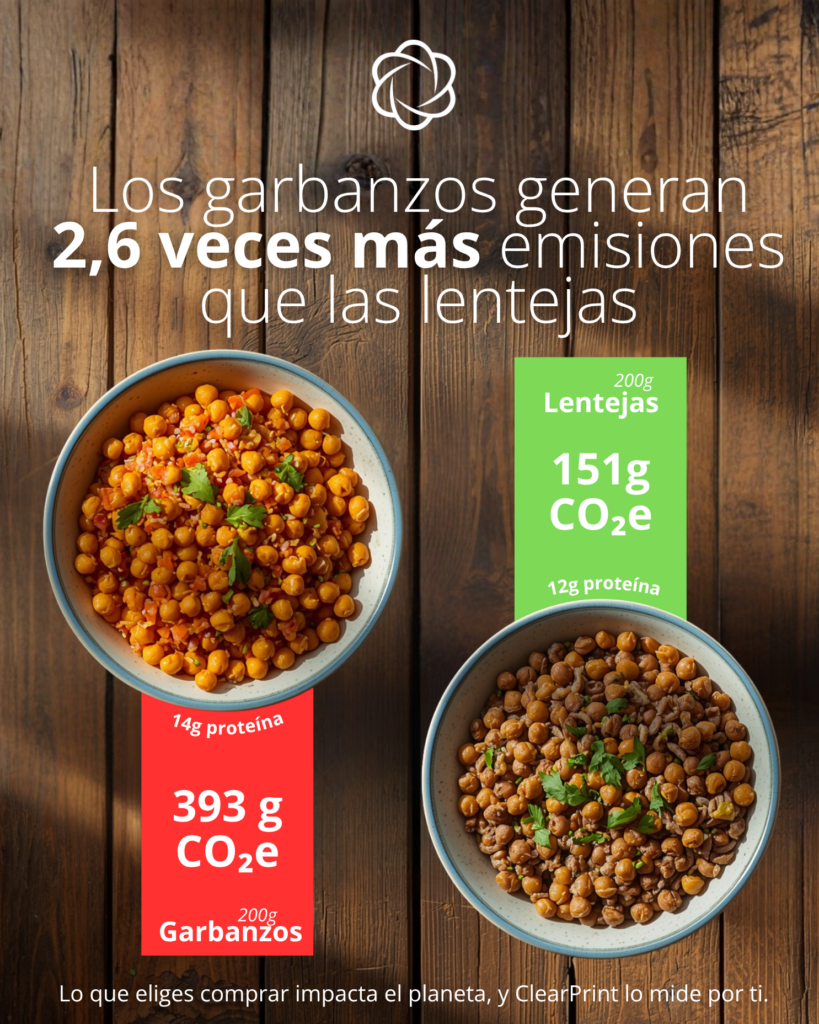
A difference that shows that even similar foods can have different environmental impacts.
What Does CO₂e Mean?
CO₂e, or carbon dioxide equivalent, is a unit that allows the impact of different greenhouse gases to be expressed using a common measure.
Using this measure allows us to compare the carbon footprints of different products and more easily understand the environmental impact associated with our consumption choices.
Small Choices, Big Impacts
Does this mean we should stop eating chickpeas? No. Understanding the carbon footprint of food isn’t about simply classifying what we eat as “good” or “bad.” It’s about having more information to make informed choices.
In this case, both options provide plant-based protein, but lentils have a lower carbon footprint for the serving analyzed. When this information is presented clearly and understandably, we can consider environmental impact as another factor in our everyday decisions.
Understand the Impact to Make More Informed Choices
At ClearPrint, we believe that what we choose to buy and consume can also make a difference.
That’s why we measure and turn the environmental impact of food into easy-to-understand information, making it possible to compare products, identify differences, and make more informed decisions.
Because small choices can have a big impact, and understanding that impact is the first step.
Discover our news story: «Un desayuno cotidiano, dos impactos muy distintos»