Every October 1st, International Coffee Day is celebrateda date that invites us to appreciate one of the most widely consumed beverages and a staple of our daily lives. But it can also be an opportunity to ask ourselves a different question: What is the environmental impact of the way we drink our coffee?
When we think about its carbon footprint, we might assume it all comes down to the coffee itself. However, the ingredients we add and the amounts we use can also have a significant impact on the emissions associated with a cup of coffee.
Milk Is Also Part of the Footprint.
A simple example helps illustrate this difference. According to the data used by ClearPrint, a coffee with one tablespoon of milk can have a carbon footprint of approximately 96 g CO₂e., while a latte preparado con 400 ml de leche puede llegar a 1.024 g de CO₂e.
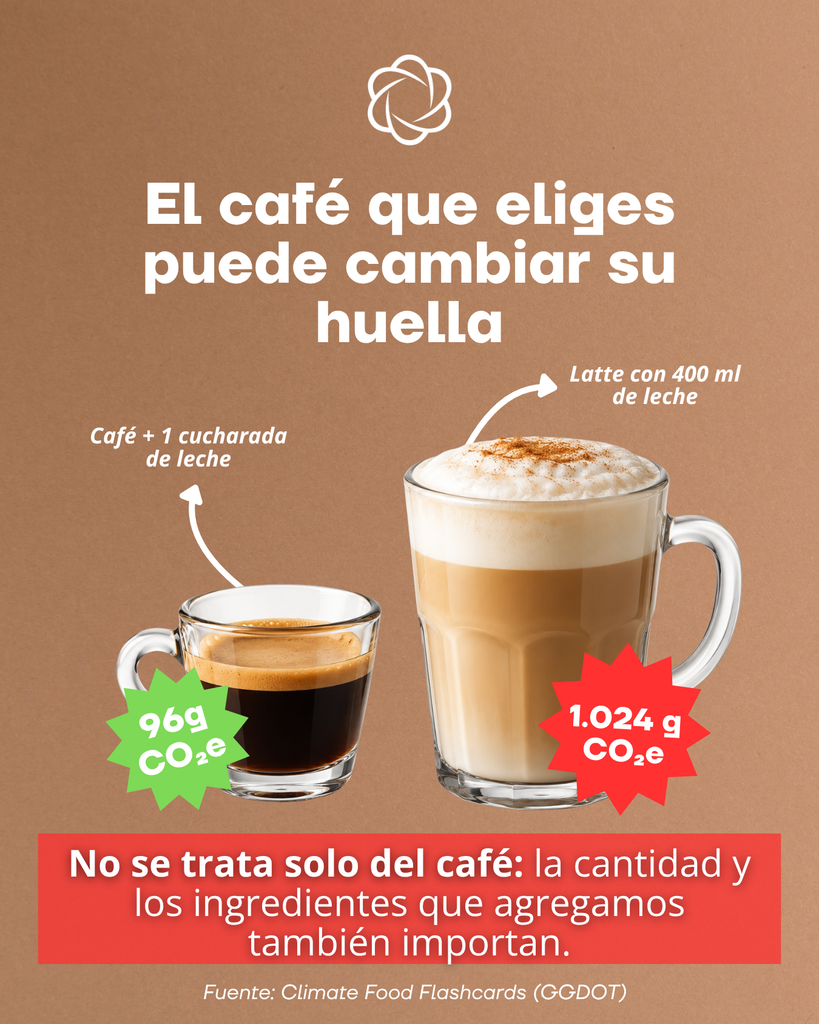
This shows that a drink’s carbon footprint depends on more than just its main ingredient. The amount of milk and other products we add also contributes to its overall environmental impact.
Additionally, The Type of Milk We Choose Can Make a Difference.In the examples analyzed, cow’s milk has a carbon footprint of approximately 550 g de CO₂e, while almond milk generates 180 g CO₂e and oat milk has a footprint of around 110 g de CO₂e.
Understanding Its Footprint Doesn’t Mean Giving Up Coffee.
Talking about the carbon footprint of food isn’t about making people feel guilty or telling them what they should or shouldn’t consume. The goal is make information visible that we don’t usually see. and understand how our choices can change the environmental impact of what we eat and drink.
Small actions, such as using less milk when possible, exploring plant-based alternatives, brewing only as much coffee as we plan to drink, or avoiding ingredient waste, can also make a difference.
This International Coffee Day, we invite you to enjoy your usual cup while learning more about the environmental story behind it.
At ClearPrint, we transform environmental data into easy-to-understand information, helping businesses and consumers understand the carbon footprint of food and make informed decisions.
Fuente: Climate Food Flashcards (GGDOT)
Discover our news story: Alimentación sostenible: ¿comer saludable significa cuidar el planeta?.