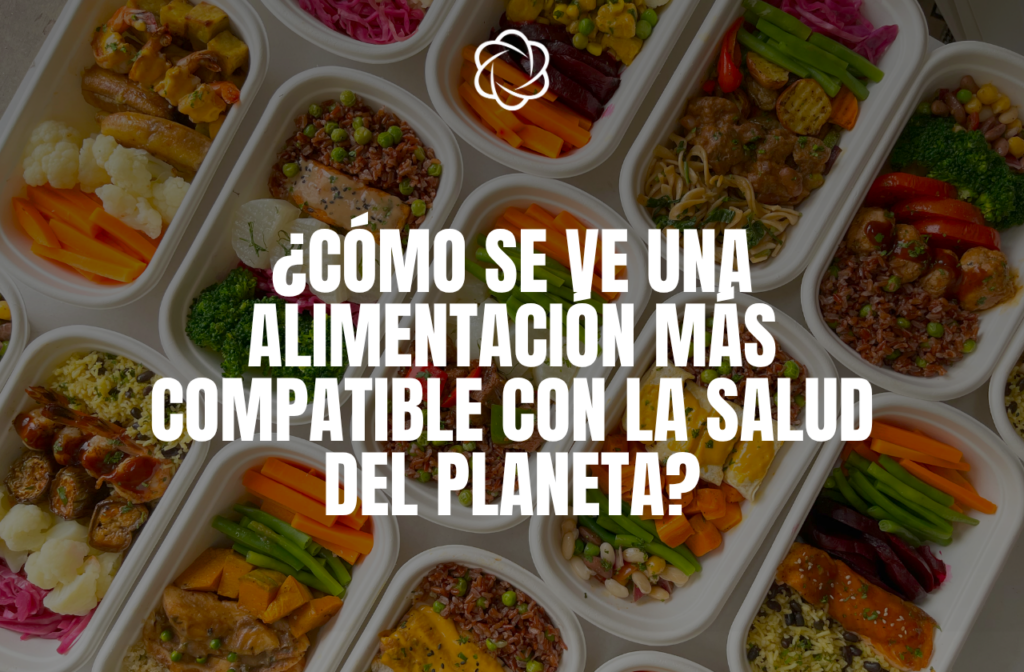
Food is part of our everyday lives, but behind every food product are also processes involving production, transportation, storage, and distribution, all of which generate environmental impacts.
That’s why, when we talk about a diet that is more compatible with the health of our planet, we’re not necessarily talking about eliminating foods or completely changing our diet. It’s about making small choices that help us reduce our impact and make more informed consumption decisions.
1. Reduce red meat consumption
One option is to reduce how often we eat red meat and diversify our sources of protein.
Beef generally has a considerably higher carbon footprint than many other foods. This doesn’t necessarily mean eliminating it from our diet, but rather considering how often we consume it and complementing our diet with other alternatives.
Small changes in our food choices can help reduce the environmental impact of our diet.
2. Make More Room for Plant-Based Foods
Legumes, vegetables, fruits, and whole grains can play a bigger role in our diet.
In general, plant-based foods generate lower greenhouse gas emissions than ruminant meats, although their specific environmental impact always depends on factors such as where and how they were produced.
That’s why incorporating a greater variety of plant-based foods is another option to consider when building a diet that is more compatible with the health of our planet.
3. Avoid Food Waste
A more sustainable diet depends not only on what we buy, but also on what we do with that food afterward.
When we waste food, we also waste the resources and emissions associated with every stage that made it possible for that food to reach us, from production and transportation to storage and distribution.
Planning our grocery shopping, storing food properly, and making use of leftovers are simple actions that can help us reduce food waste.
The Same Food Can Have Different Footprints
Two similar products don’t necessarily have the same environmental impact.
Their footprint can vary depending on factors such as:
- where they are produced;
- how they are produced;
- how they are packaged;
- how they reach us;
- and what happens to them at the end of their useful life.
For example, even the same food can have a different footprint depending on its origin and the transportation required to bring it to the consumer.
That’s why knowing only which product we’re buying isn’t always enough to understand its environmental impact.
A Diet That’s Better for the Planet Starts with Small Changes
There is no single decision that can completely transform the environmental impact of our diet.
We can incorporate more plant-based foods, reduce our consumption of higher-impact products, waste less food, and better understand the footprint of what we consume.
Information helps us compare and better understand the impact behind our decisions.
At ClearPrint, we turn environmental impact into information that people can understand, compare, and use to make informed choices.
Because moving toward more conscious consumption isn’t about making perfect choices, but about having better tools to make informed decisions.
Discover our news story: “¿Cómo los alimentos impactan las emisiones globales?” and learn why the food industry plays a key role in the planet’s sustainability.