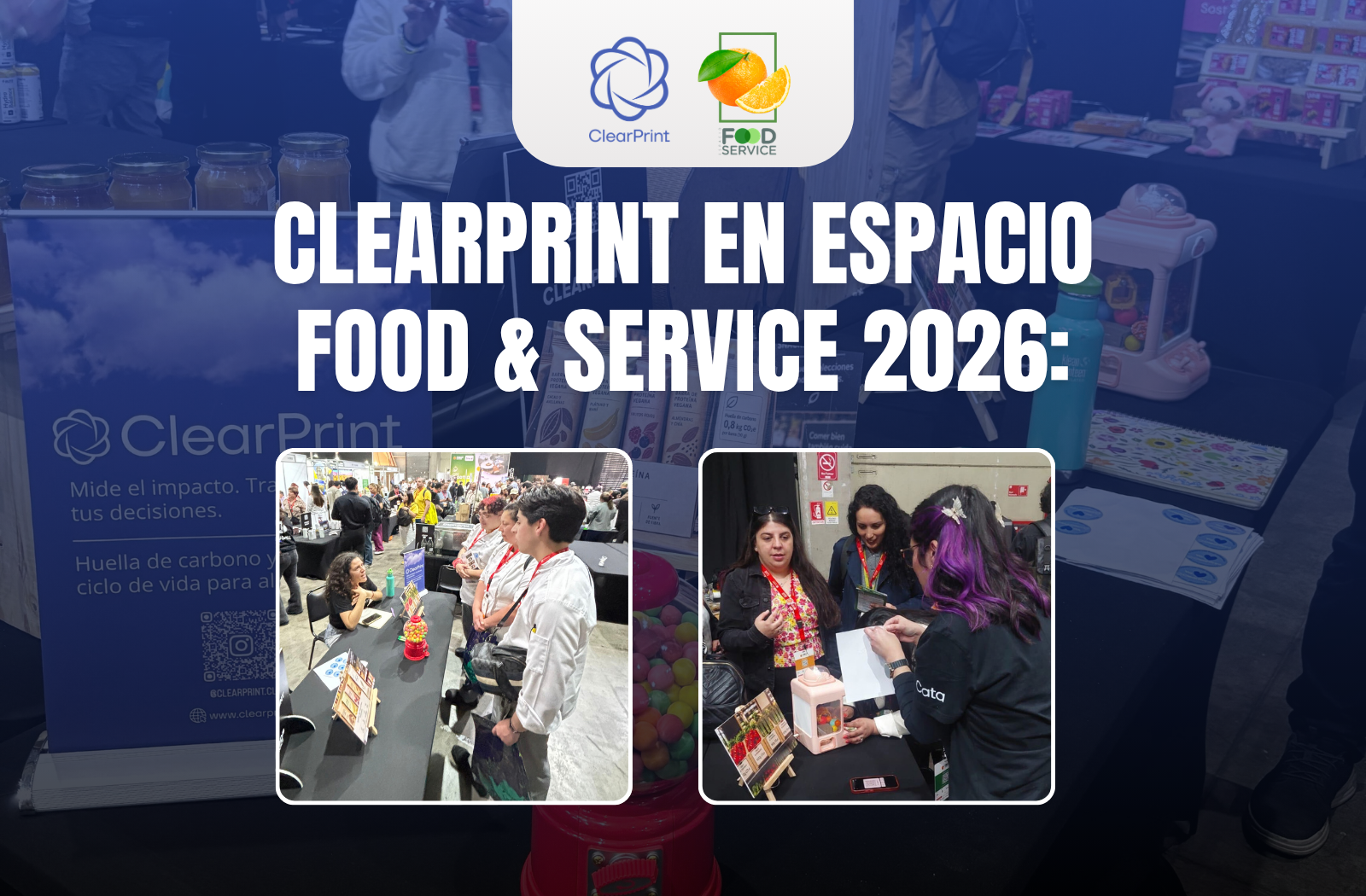
ClearPrint is Chilean software that measures the carbon footprint of food, meaning the amount of greenhouse gases emitted during its production. With ClearPrint, companies can get a comprehensive analysis of their processes and eco-label their products, so consumers can make more sustainable choices.
In Europe, this practice is becoming more and more common, and in Chile, ClearPrint is leading the way in implementing eco-labels, contributing to more conscious consumption. It's time to choose responsibly!
What is the carbon footprint of food?
The carbon footprint of food represents the amount of greenhouse gases generated throughout a food product's entire life cycle. This covers everything from raw material production to transportation, storage, processing, packaging, and distribution.
When we think about pollution or emissions, we often picture heavy industry or transportation. But the food we eat every day also has a significant impact on the planet.
For example, producing certain foods requires heavy use of water, energy, fuel, and industrial processes. Some products also have to travel long distances before reaching supermarkets or end consumers, increasing their emissions even further.
There are also impacts linked to the use of fertilizers, refrigeration, farm machinery, and preservation systems. All of this is part of a product's environmental footprint and shows that behind every food lies a complex chain of emission-generating processes.
Not all foods have the same impact
Every food has its own story, and therefore its own environmental footprint. Some products generate higher emissions because of how they're produced, while others have a considerably lower impact.
There are also significant differences between fresh, processed, refrigerated, and imported foods. Even the type of packaging and preservation can affect a product's final carbon footprint.
Another key factor is food waste. When a product ends up in the trash, all the resources used to produce, transport, and store it are wasted too. That's why reducing food waste is one of the most important actions we can take to lower the environmental impact of what we consume.
As interest in sustainability grows, so does the need for environmental information that's more transparent and easier to understand. More and more consumers want to know how their purchasing decisions affect the environment and which products generate lower emissions.
The role of eco-labels
In this context, eco-labels are becoming an increasingly important tool for consumers and businesses.
Eco-labels communicate the environmental impact of products in a simple, transparent way, helping people make more informed decisions about what they buy.
In several European countries, this kind of information is already gaining ground in supermarkets and on food products. Consumers are increasingly looking for transparency, while companies need to adapt to new environmental requirements and consumer trends.
Beyond providing useful information for consumers, eco-labels also help companies stand out, strengthen their transparency, and prepare for new environmental regulations and international requirements around sustainability and traceability.
In Chile, this practice is still growing, but initiatives like ClearPrint aim to speed up this shift and bring sustainability closer to people through clear, accessible information.
Technology and sustainability
Sustainability doesn't depend solely on major industrial changes. It's also built through small, everyday choices. Understanding the environmental impact of food is a first step toward more conscious and responsible food systems.
That's why tools like those developed by ClearPrint turn complex data into useful, easy-to-understand information for consumers and businesses.
Through carbon footprint measurement and eco-labeling, it's possible to increase transparency, promote more sustainable decisions, and move toward a food industry with better environmental information and traceability.
The food industry faces growing challenges around sustainability, transparency, and emissions reduction. In this context, technologies like those developed by ClearPrint simplify environmental measurement processes that have traditionally been complex, helping companies better understand the impact of their products and move toward more sustainable strategies.
Discover our news story: “Ecoetiquetas en el supermercado: eligiendo con conciencia” and find out how eco-labels can help you understand the environmental impact of the products you buy every day.
Follow us on our Instagram so you don't miss any updates.