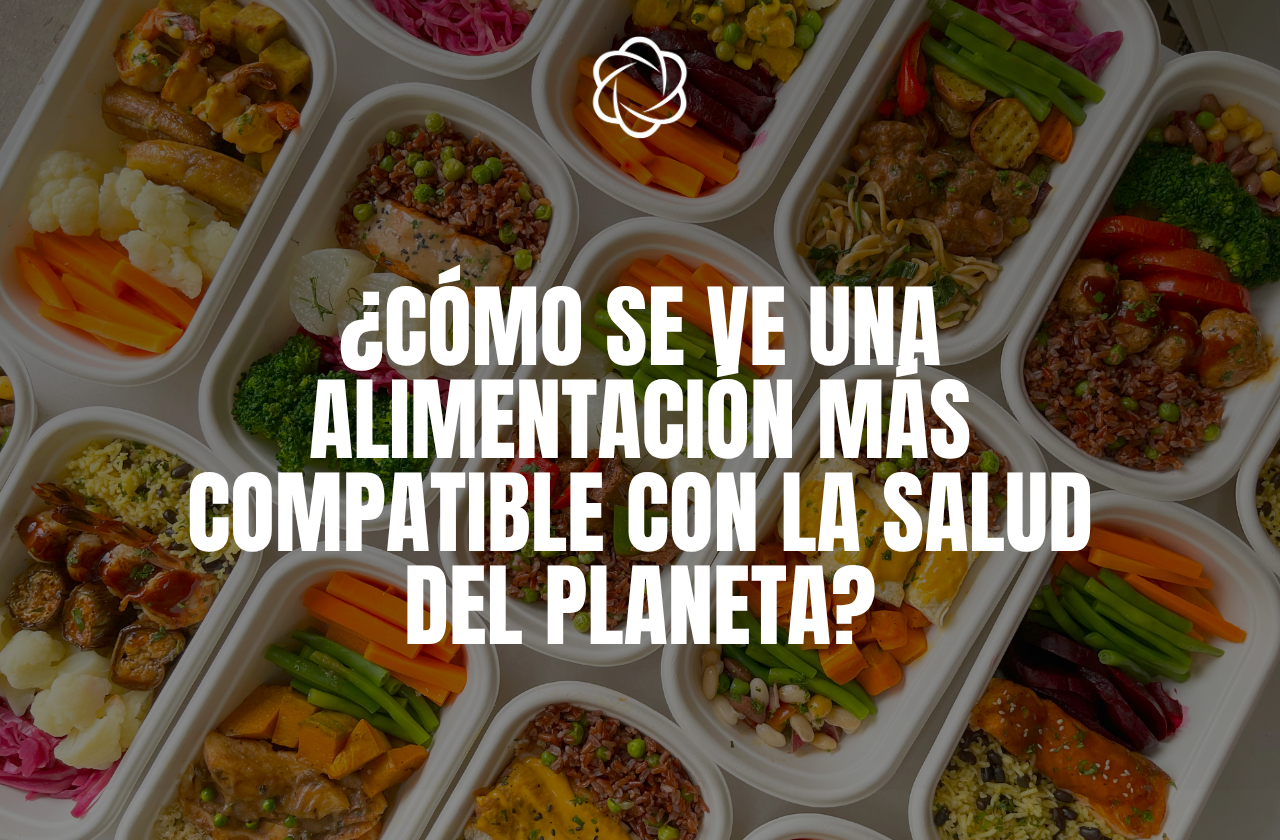
Do all foods have the same environmental impact? No. Food can have very different environmental impacts depending on the type of product and how it's produced, transported, and processed.
Many people want to shop more consciously, but they don't always know the environmental impact behind the food they eat every day. That's where carbon footprint measurement is becoming increasingly important in the food industry.
For example, producing 1 kilogram of beef can generate up to 71 kg of CO₂ equivalent (CO₂e), while 1 kilogram of fish can generate between 3 and 14 kg of CO₂e.
That's a huge difference.
This data shows how foods can vary widely in their environmental impact, even when they play a similar role in our diets.
What Does CO₂e Mean?
CO₂ equivalent (CO₂e) is a unit used to measure the combined impact of different greenhouse gases on the same scale. It makes it possible to compare foods and understand which ones generate the most emissions throughout their life cycle.
A food's carbon footprint covers different stages, such as production, resource use, transportation, processing, storage, and distribution. For some products, emissions can rise considerably due to the intensive use of water, energy, animal feed, or long-distance transportation. That's why measuring this information helps us better understand where the biggest impacts occur and what opportunities exist to reduce them.
Why measuring matters for improvement
Many companies are now starting to measure their environmental impact to better understand their processes and meet the expectations of increasingly conscious consumers.
At ClearPrint, we use innovative software to measure and break down emissions at every stage of a food's life cycle. This helps companies understand their environmental impact and spot opportunities for improvement in their production processes.
Tools like carbon footprint measurement and eco-labels also help turn technical information into clear, easy-to-understand data for consumers and businesses. Environmental transparency is becoming an increasingly important factor in the food industry, especially in markets where sustainability is already a priority.
Every choice can make an impact
We often think individual choices have little effect, but small actions add up and can lead to meaningful change. Understanding the environmental impact of food is the first step toward making more informed decisions and moving toward more sustainable food systems. Every choice counts when it comes to building a future that's more responsible toward the planet.
At ClearPrint, we aim to bring sustainability closer to consumers and businesses through carbon footprint measurement, eco-labeling, and environmental communication tools for food.
Want to know the carbon footprint of your products or bring eco-labels to your company? Get in touch and find out how to measure and communicate your environmental impact clearly and transparently.
Understanding how emissions differ between foods is a first step toward making more informed purchasing decisions.
Discover our news story: “Ecoetiquetas en el supermercado: eligiendo con conciencia” and find out how eco-labels can help you understand the environmental impact of the products you choose every day.
Follow us on our Instagram so you don't miss any updates.