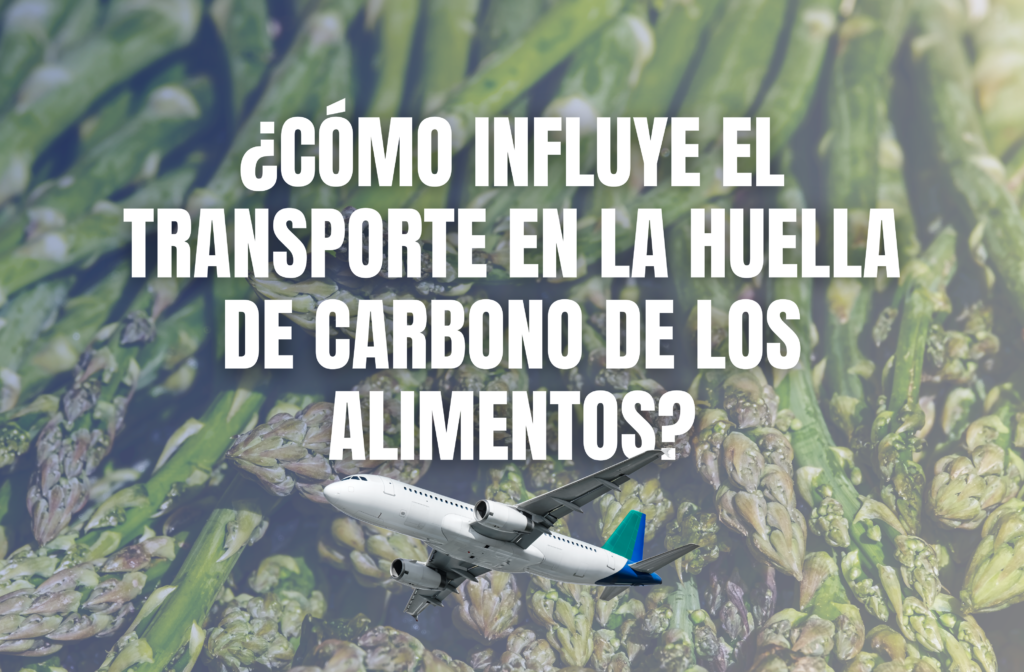
When we think about a food's carbon footprint, we tend to associate it only with how it's produced. However, transportation can also affect its environmental impact, especially when products have to travel long distances or are shipped by air.
While not all transported foods generate high emissions, those that need to be delivered quickly to stay fresh can have a significantly larger carbon footprint because of the mode of transportation used.
The same food can have very different impacts
Un ejemplo es el de los espárragos.
According to data compiled by Our World in Data, an 80-gram serving of air-freighted asparagus can generate around 1,016 g of CO₂ equivalent, while a serving of in-season asparagus produces approximately 160 g of CO₂e.
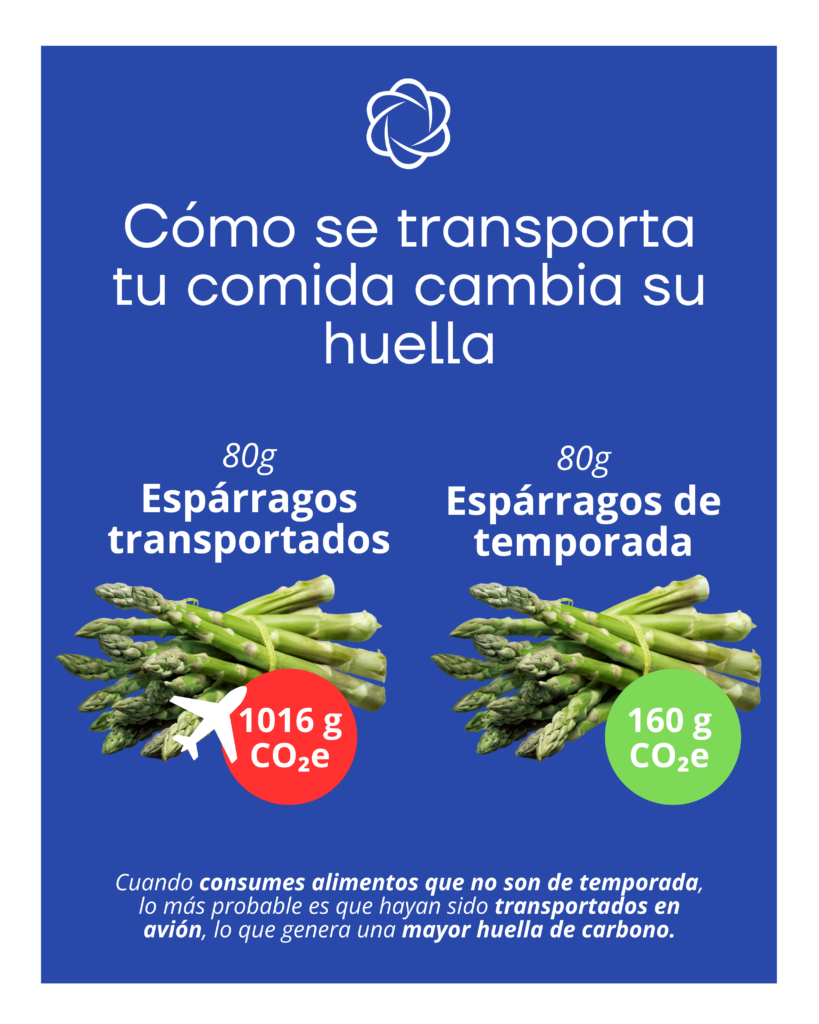
The difference isn't in the food itself, but in the emissions from the transportation needed to get it to the consumer.
Why does air freight generate more emissions?
Air freight is one of the most emissions-intensive modes of transportation per kilogram transported.
For fresh, perishable foods like fruit, vegetables, and some seafood, air freight shortens delivery times, but it also significantly increases the carbon footprint compared to other options such as sea or land transportation.
That's why logistics is one of the factors considered when assessing a food's environmental impact.
Why eating seasonally matters
Choosing seasonal food offers several environmental benefits.
When a product is in its natural season, it can usually be sourced through more efficient supply chains with less need for urgent transportation.
While every food is different, prioritizing seasonal and locally sourced products can help reduce emissions from the food system.
ClearPrint's role
At ClearPrint, we help food companies measure the carbon footprint of their products using international methodologies and data adapted to the local context.
Our software helps identify the stages with the greatest environmental impact, assess opportunities for improvement, and communicate transparent information about the environmental performance of food products.
Understanding a product's impact is the first step toward making more sustainable decisions.
Discover our news story: «Ranking de emisiones: Carnes blancas» and keep exploring how carbon footprint information can help you understand the environmental impact of the food we eat.
Follow us on our Instagram so you don't miss any updates.
Sources: Poore, J., & Nemecek, T. (2018). Reducing food’s environmental impacts through producers and consumers. Science, 360(6392), 987–992.
Our World in Data. Environmental impacts of food production.